
The top CFOs in Australian deep tech in 2026 include Joe Bedewi (Morse Micro), Federico Tata Nardini (Fleet Space), Ashley Hasforth (Gilmour Space), Carla Balanco (DroneShield) and Tom Pereira (Advanced Navigation), scored on capital-stack difficulty, scale and track record.
 1
1Joe Bedewi
CFO, Morse Micro
- In seat
- Since March 2026
- Scale
- ~A$500M valuation
- Pedigree
- Altium, Lattice Semiconductor, Uhnder, Intel
The strongest semiconductor-finance resume ever assembled inside an Australian startup: CFO of ASX-listed Altium, corporate VP and CFO at Lattice Semiconductor, CFO at Uhnder, and fifteen years at Intel. Bedewi relocated from Austin to Sydney in March 2026 to become the inaugural CFO at Australia's biggest chip company, the Wi-Fi HaLow maker Morse Micro, a hire Capital Brief read straightforwardly as plotting a path to IPO, with a $32 million pre-IPO round reportedly locked in. When a company hires this seat, it is announcing its intentions.
 2
2Federico Tata Nardini
Chief Financial Officer and Chief Investment Officer, Fleet Space Technologies
- In seat
- Since January 2022
- Scale
- Series D A$150M at an A$800M+ valuation
- Why here
- Space finance across four countries
Runs one of the most complex finance briefs in the sector: the Adelaide satellite company's stack spans venture rounds, an Australian Space Agency grant and a Defence Space Command contract, and Tata Nardini sits on the boards of Fleet's subsidiaries in Canada, Chile, Luxembourg and the United States. Twenty years of CFO experience across Europe, India, the UAE and Australia, applied to mineral-exploration satellites since January 2022.
 3
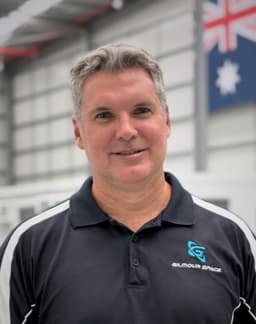
3Ashley Hasforth
- Scale
- Series E led by Hostplus and NRFC, plus A$52M federal grant
- Why here
- Financed Australia's first orbital rocket program
The CFO behind the first Australian-built orbital launch attempt. Gilmour's capital stack is the full deep tech spectrum: Blackbird and Main Sequence venture rounds, superannuation funds on the register, a A$52 million federal grant, all funding hardware that either flies or very publicly does not. Financing a rocket program through a failed first launch and into a second attempt is the strongest nerve test on this list.
 4
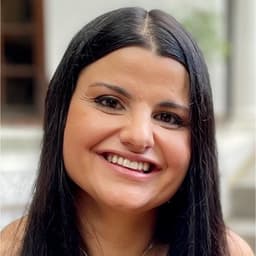
4Carla Balanco
CFO and Joint Company Secretary, DroneShield
- In seat
- Joined 2018, promoted from FC
- Scale
- ASX-listed, 4,000+ systems sold
- Why here
- Defence contracts at listed-company pace
The listed seat. Balanco joined the counter-drone company as financial controller in 2018 and rose to CFO, and now runs finance for one of the ASX's defence-tech growth stories, including a roughly A$49.6 million European military contract announced in late 2025. Defence revenue is lumpy, sovereign and scrutinised; running it inside continuous disclosure obligations is a specialist craft.
 5
5Tom Pereira
CFO, Advanced Navigation
- In seat
- Two years and eight months
- Why here
- KKR-backed navigation tech at global scale
Runs finance for Australia's navigation-technology flagship, whose inertial systems ship into land, sea, air and space programs and whose register includes KKR. Pereira's path is unusual for the sector, deputy CFO at Freelancer and CFO of MILKRUN before this seat, making Pereira one of the few deep tech CFOs here who learned the trade in high-velocity consumer businesses first. Sometimes the sector filter really is the wrong filter.
 6
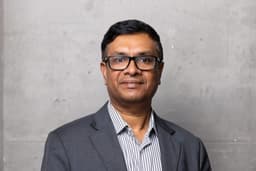
6Lasantha Thennakoon
CFO, Diraq
- Scale
- US$150M+ raised incl. government programs
- Why here
- Quantum's rare true-CFO seat
The exception that proves the sector's rule: while most Australian quantum companies run a Head of Finance, the UNSW spin-out building silicon spin-qubit machines runs a full CFO seat. Thennakoon brings twenty-five years of international finance leadership to a company whose funding mixes a $100M+ Series A and government quantum programs across four offices, 70-plus staff and one of the field's deepest patent moats.
 7
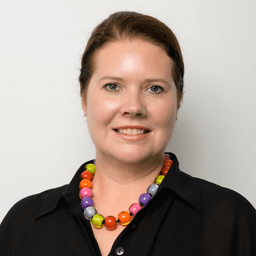
7Virginia Marshall
CFO, Samsara Eco
- In seat
- Since January 2023
- Pedigree
- SocietyOne CFO, Westpac deputy CFO
Three and a half years running finance for the enzymatic recycling company partnered with lululemon, after a CFO seat at fintech SocietyOne and a deputy CFO role in Westpac's consumer bank. Climate-materials finance is grant-heavy, partner-heavy and capex-heavy all at once; Marshall's banking-grade background is exactly the profile this sector recruits when it gets serious.
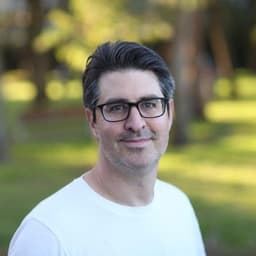 8
8Dan Shakenovsky
CFO, Harrison.ai
- Scale
- US$240M+ raised
- Why here
- Clinical AI under a regulated capital stack
Finance for AI that reads medical scans, backed by more than US$240 million and strategic investors including Sonic Healthcare. Clinical AI sits at the deep tech and healthcare intersection, where the CFO manages regulatory approval timelines, hospital procurement cycles and strategic investors on one balance sheet.
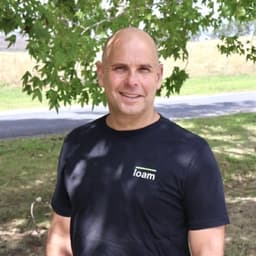 9
9Dion Cohen
CFO, Loam Bio
- Scale
- A$150M total funding
- Why here
- Synthetic biology in an agricultural P&L
The regional outlier, and deliberately so: Loam runs microbial carbon sequestration from Orange in regional New South Wales, backed by A$150 million in total funding, including a US$73 million Series B co-led by Lowercarbon and Wollemi Capital that closed in February 2023. Cohen's brief joins two of the hardest finance domains, synthetic biology R&D and agricultural economics, in a company whose product is measured in soil carbon.
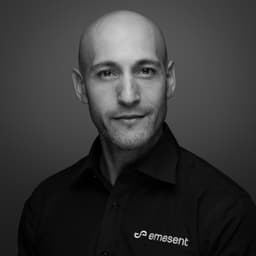 10
10David Nucifora
CFO, Emesent
- Base
- Brisbane
- Why here
- CSIRO spin-out at export scale
Runs finance for the CSIRO spin-out whose Hovermap drone-autonomy and lidar systems map mines and infrastructure worldwide. The classic Australian deep tech arc, public research commercialised into a global export business, with a finance function that has to serve mining-industry sales cycles and hardware margins simultaneously.
The offshore seat, and the quiet vacancies
The biggest deep tech CFO seat with Australian roots is not in Australia: PsiQuantum, co-founded by Australians and building its first utility-scale quantum computer in Brisbane with an A$940 million Commonwealth and Queensland investment package, runs finance from Palo Alto under Susan Kim, formerly CFO of PacBio. Meanwhile two well-funded locals currently show no CFO at all: Hysata's leadership page lists none, and SunDrive's co-founder CFO has moved on. In companies burning capital on hardware timelines, those are seats to watch.
The structural finding: deep tech runs on Heads of Finance
A large share of Australian deep tech deliberately does not employ a CFO. Q-CTRL runs finance under Donna Hacker, Head of Finance, in the seat since 2022. Silicon Quantum Computing runs Aaron Behan, Head of Finance. Quantum Brilliance runs Julia Bright, Group Head of Finance. These are well-funded companies, SQC alone raised A$130 million, choosing a flatter finance structure until commercialisation demands the full seat.
I read that as a timing signal, not a gap in talent. It maps exactly to what I see in searches: the first senior finance hire carries the company a long way, and the CFO title arrives when the capital stack, not the org chart, requires it.[1] The rounds themselves are part of why: some Australian deep tech businesses raise a $30 to $50 million seed, which is enormous for this market and puts a capital stack in front of a finance function that barely exists yet.[3] For founders hiring into this sector, the practical advice is the same advice I give on candidate profile: applying a strict sector filter is a common mistake that causes founders to miss the most suitable candidates, because the best deep tech CFO candidates often come from heavy or food manufacturing, defence or mining rather than from deep tech itself.[2] Look at this list: consumer businesses, banks, Intel, Westpac. The sector hires for capital-intensity skills, wherever they were learned.
Tom Hunter's verdict: A deep tech founder asked me what a CFO would even do in year one when revenue is realistically 7 years away. In deep tech, the years before revenue are exactly when finance can make an impact, because often they're the ones responsible for whether the business survives to see any revenue at all. If you get a great finance leader in at the right moment, you can buy yourself years. In deep tech, that's the difference between winners and losers. (LinkedIn, July 2026) That is why the timing differs from software. As I said on Builders & Doers, for “deep tech where there is a heavy inventory and stock component. So like space tech or robotics or like really heavy science, they probably need someone at seed”, because the complexity of the business is much higher than a single product software company. (Builders & Doers, September 2026; video at 1:13)
Tom Hunter's verdict: When deep tech founders brief me on a CFO, they usually want someone who has done it before in deep tech: R&D tax offsets, long commercialisation timelines, government grants and capital conversations that don't follow a standard playbook. Fair enough, I get it. But what you actually need in a deep tech CFO isn't experience specifically in space tech, robotics or AgTech. It's urgency, adaptability and someone who's willing to roll up their sleeves and get into the detail. “The sector knowledge is more similar than you think, but those personality traits are harder to find than you realise.”[4]
Tom Hunter's verdict: The first finance hire in deep tech usually walks into messy accounting. That's fine while the founder is doing the finance and sending it off to the external accountant, but once the business starts to scale you can't tell what's on paper from what's actually cash in the bank. So the first job is financial controls and processes. The second is communication: a deep tech business might have a warehouse building something, a sales team and an R&D science team, and a good finance leader goes and speaks to each of them about what the numbers mean for their part of the business.[5]
Tom Hunter's verdict: Where the full CFO seat can wait, a fractional CFO alongside a really good Head of Finance or financial controller can look after the day-to-day, and the company doesn't need to spend the extra $50,000 to $100,000 on a CFO.[6] A capable Head of Finance pays for themselves within six months with a solid R&D return.[7]
For what the first-CFO decision looks like from the inside, read hiring your first CFO.
References
- What the funding actually looks like at the top of this market. I described it on the Behind The Story Show podcast: some of them might have a $30 to $50 million seed round, which is massive, particularly for the Australian market.
- From my own search work: the first CFO mandate typically opens once a business passes 50 heads and roughly $10 million ARR, with the conversation starting at Series A in anticipation of Series B diligence. Deep tech pulls that timeline forward, not back. With heavy inventory, R&D, grants and a commercial product that might be seven years away, a deep tech business can need a CFO much sooner than a pure-play SaaS business, sometimes at seed if the raise is big enough, as I said on the Behind The Story Show. The first finance hire often comes in around a seed round of $10 to 15 million, and that hire is often a Head of Finance, as I told Celia's Corner.
- A position I published in June 2026 and stand by: for deep tech CFO roles, a strict sector filter is a common mistake, and the most suitable candidates often come from heavy or food manufacturing, defence or mining rather than deep tech itself.
- Tom Hunter on LinkedIn in June 2026, on the classic challenge for deep tech founders when they need a CFO.
- Tom Hunter on Celia's Corner: What Founders Get Wrong About Their First Key Hires, July 2026.
- Tom Hunter on the Behind The Story Show, August 2026.
- Tom Hunter on LinkedIn in May 2026, in his first finance hire playbook.
These guides set out how we see it, drawn from the searches we run and the finance leaders we work with. They are general information about the market, not financial, accounting or legal advice, and they are no substitute for advice on your own circumstances.